Showing posts with label hunting. Show all posts

Women Going Feral — And Then Writing

Last fall, during a layover at Sea-Tac airport, I was checking email on my laptop when this young woman walked up and asked if she could share the table (there were too few of them).

She had two books with her — one of them was Cheryl Strayed's Wild, while the other was a novel. "I can't decide which one to read," she said.

"Read Wild," I said. "My wife loved it — I've read parts of it — it's good."

Later, M. and I saw the movie, which was overlooked in the Oscars — too odd for the judges, too many trees? — fairly faithful to the book, but with Extra Hollywood Stereotyping.*

Meanwhile, having read her former blog and her book on the cultural history of falcons, and corresponded a little, I was awaiting Helen Macdonald's memoir H is for Hawk. 

 I knew she could write. There had been the blog post where she described a goshawk flying through trees: ". . . the gos spooled away through the trees. He looked like a coin falling through water, flashing silver and grey. Some kind of metal. A very fierce one. Potassium, Sodium, Goshawk."

(We hates her, preciousss.)

H is for Hawk picked up a bucket of literary prizes in Britain, and reviewers on this side of the pond have been equally laudatory.  

The New Yorker gave it four pages (!!), reviewer Kathryn Schulz writing, "Books about nature, like the category 'animal,' sometimes suffer from a sin of omission: in both cases, people belong inside them but are often left out. Books about grief run the opposite risk; too much of the person can be left in, too much of the world omitted. Macdonald, who is writing both kinds of book at once, makes neither mistake."

Painted with a very, very broad structuralist brush, both books tell the same story. The writer loses a dear parent (Strayed her mother, Macdonald her father.) Both have been been drifting — both have self-destructive streaks (Strayed's more developed, perhaps) — both struggle with loneliness.

Photograph by Christina McLeish 
Both seek the wild, Strayed in the Sierra Nevada and Cascade ranges, Macdonald, the falconer and academic historian of science, in more domesticated England, in the yellow eyes and murderous flights of Mabel, a newly acquired goshawk.

Strayed, backpacking the Pacific Crest Trail, tells one of the female solo hikers whom she meets, "Honestly? I'm lonelier in my real life than I am out here. I miss my friends, of course, but it's not as if I have anybody waiting for me at home. How about you?"

Macdonald, looking at her life alone in the woods with her goshawk, feels numb: "My heart is salt."

Both must enter the woods and then follow the thread of their stories out — but how far, and for how long? 

* Strayed meets a farmer who is "working," which seems to consist of driving a tractor up and down a dirt road in the desert, no cropland in sight and nothing attached to the tractor.

How Deer See Blue Jeans

Depth of concealment . . . not.
At his Hits and Misses blog, Gerard Cox discusses another study of deer vision and human camouflage:

"Within this blurry focus, however, some colors are better perceived than others.lue, violet, and near ultraviolet light are seen more clearly by [whitetail] deer than other colors. Near sunrise and sunset, blue and UV makes up much of the light available, and that's what deer see better than other colors. So keep those jeans at home, boy."

And if you say that you have shot plenty of deer and elk while wearing blue jeans, well, I have done that too — from a distance.

At left, a photo from an old experiment of shooting pictures of hunting clothes in B&W to try to simulate deer vision. The model's camo sweater is black/blaze orange, and shortly after this time, Colorado changed its regs to forbid blaze orange camouflage — you had to have a solid color. He is wearing blue jeans.

As I understand, this is all about color-blindness in men, not about deer or elk. If a man is color blind, he can still see the blaze orange as a light color, even better than he could see "safety green," which is right in the center of the human visual spectrum.

For a time in my early twenties I sold menswear in a department store, and I was surprised how often a customer would select a shirt, for instance, and then say, "I'm color-blind, so could you pick out a tie to go with this shirt for me?"

Edges of reflective hat band catch your eye.

Yet some say that color-blindness has evolutionary value, giving those men affected a sort of predator-type vision, an ability to spot movement against jumbled backgrounds.

More information:

• "Behavioral measure of the light-adapted visual sensitivity of white-tailed deer" (abstract only).

• Camopedia: The Camouflage Encyclopedia.

• Kamouflage.net, another compendium of military camouflage from around the world.

• "Portraits, Cubists, and Camouflage" — how pre-World War One artists influenced military camouflage design.

• The U.S. Army's ongoing camouflage controversy.

• A history of digital camouflage development, focused on the United States and Canada.

Who Came to the Gut Pile?

On the afternoon of November 5th, I walked out the back door and hiked to some burned-over BLM land about 45 minutes from the house.

Maybe it was my scouting and camera work at "Camera Trap Spring," maybe it was the red gods' favor, but about an hour after leaving home I shot a mule deer buck, three points or four points (Western count), depending which side you looked at  — not a huge buck, but since I would be backpacking the meat out, that was OK.

I boned the meat and filled my Osprey Talon 22 day pack past its design specifications, I am sure, but it's a tribute to that design that it still felt comfortable, even though heavier than I had ever loaded it.

The next morning I returned — with a larger pack —carefully glassing the area as I moved through the burnt pines, lest a bear have found the gut pile, bones, etc. No, just a few crows were flying around and talking.
Magpies came first, the morning that I set the camera.

So would a bear or other scavengers come? One way to find out — I brought a scout camera with fresh batteries, piled bones, hide, rib cage, and skull with the guts — and set it to cover the scene.

Today, twenty-four days later, M. and I went back for it. The deer's remains had been rearranged considerably.

The well-nibbled rib cage and spine were a few yards away, downhill. The hide was in several pieces, and the head was not immediately visible.

The slideshows are 19 MB and 16 MB, so if you don't want to load them, see highlights below.

The bear came later. An ear-tagged bear, meaning it has been relocated once — not like there is any vacant habitat.

The golden eagle made multiple visits.

Golden eagle

The ear-tagged bear has a feast.
Of course there were lots of crows visiting, and a couple of ravens and a red fox. And other deer walked past the scene unconcerned.

What Can You Call a "Trophy"?

Among the countless thoughts running through my head at 5 a.m. today (mostly not stuff I would share) was a bit of self-castigation for using the word "trophy" in the previous post about blurry photos at the waterhole. (I see that I used it on my first ringtail photo last April too. So I'm being repetitive too.)

What did I really do? For years, off and on, I have been hanging cameras on that by the tiny, seasonal spring.

Ringtails, meanwhile, have been on my list of critters that I know are supposed to be here, but I never see. Or that might be here—there was the whole issue about fishers in the Wet Mountains, yes or no, in 2005.

This year I set the camera on May 5th, checked it every four to six weeks, switching out the memory card and the batteries as needed.

As usual, being out there—or being out there in the form of a surrogate plastic box with a lens—gets results. I set up a gadget, and it did the work while I slept.

But I laugh at myself for using the word "trophy," like I stalked the magnificent beast or something. It is such loaded word. Some people loath it. Even I felt a little bit strange when I once visited a rich doctor's two-story-tall trophy room full of heads of African big game animals, a full-body mount of a polar bear, etc.

There is that underlying sense of conflict in the word, whose Greek root means "monument of an enemy's defeat."

Yet we all hang onto things that remind us of peak experiences, unless we are true renunciates. My "trophy" is tasteful, but yours is disgusting—is that it?

Maybe I should have just used the word "accomplishment." With two ringtail "hits" at two different sites, I have proven to myself that they are here, and now I need to figure out how to get better pictures, not that I am trying for the quality of photos that a print magazine needs.

But if I worked for a better photo and got it, that would be a trophy. The enemy would be my own laziness.

Bible Verses for Pheasant Hunters

You drive through the prairie states at this time of year, and there are lots of "Welcome Hunters" signs on motels and stores. Pheasant season is at its peak, especially south of Interstate 94, which seem to follow some kind of climate boundary—there are fewer pheasants north of it.

Where I am staying right now in Valentine, Nebraska, I can see people walking bird dogs under the motel's red neon lights. On the highway, pickup trucks with dog boxes, some pulling duck boats, flash past.

But it was a Days Inn in Pierre, South Dakota, that took the prize. Its sign read, “Get up, Peter. Kill and eat. Acts 10:9."

Blog Stew with Scottish Bones

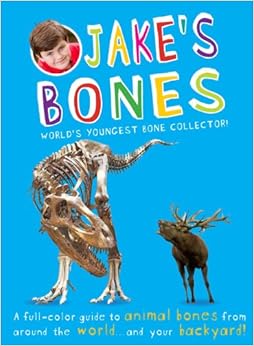
Jake's Bones is a blog by/about a Scottish boy who picks up bones in the woods and takes them home. "I've been collecting bones since I was six, and I started blogging in July 2009 when I was seven." Now it is a book as well.

¶ On the locavore-new woman hunter axis, Kristen Schmitt's blog City Roots to Hunting Boots chronicles her journey to become a hunter, a bowhunter in particular.
Thumbing through back issues of Deer & Deer Hunting, I find myself stumbling over terminology related to archery, bowhunting, and rifle hunting – all words I need to start familiarizing myself with for my future goal (and also so I sound like I know what I’m talking about). Considering that I didn’t grow up within a hunting family, it’s all new to me. Luckily, my husband has been hunting since childhood and is one of the most valuable resources I have. - See more at: http://www.deeranddeerhunting.com/blogs/locavore-blog/locavore-blog-chasing-arrow-archery-terms#sthash.qRQdfUSg.dpuf
Thumbing through back issues of Deer & Deer Hunting, I find myself stumbling over terminology related to archery, bowhunting, and rifle hunting – all words I need to start familiarizing myself with for my future goal (and also so I sound like I know what I’m talking about). Considering that I didn’t grow up within a hunting family, it’s all new to me.
¶ Part of a discussion on the question "Does hunting make us human?" from David Stallings at The Center for Humans & Nature website. You can read more responses as well from Mary Zeiss Stange, Steve Bodio, Tovar Cerulli, and others.
Thumbing through back issues of Deer & Deer Hunting, I find myself stumbling over terminology related to archery, bowhunting, and rifle hunting – all words I need to start familiarizing myself with for my future goal (and also so I sound like I know what I’m talking about). Considering that I didn’t grow up within a hunting family, it’s all new to me. - See more at: http://www.deeranddeerhunting.com/blogs/locavore-blog/locavore-blog-chasing-arrow-archery-terms#sthash.qRQdfUSg.dpuf
Thumbing through back issues of Deer & Deer Hunting, I find myself stumbling over terminology related to archery, bowhunting, and rifle hunting – all words I need to start familiarizing myself with for my future goal (and also so I sound like I know what I’m talking about). Considering that I didn’t grow up within a hunting family, it’s all new to me. Luckily, my husband has been hunting since childhood and is one of the most valuable resources I have. - See more at: http://www.deeranddeerhunting.com/blogs/locavore-blog/locavore-blog-chasing-arrow-archery-terms#sthash.qRQdfUSg.dpuf

Boots on the Ground: Backcountry Hunters & Anglers' 10-Year Climb

I spent last weekend at the national rendezvous of Backcountry Hunters & Anglers, and although I do not plan to write it up in a journalistic way, I have at least one post planned.

Meanwhile, here is a short video summarizing BHA's tenth anniversary. BHA went from a small group passing the whiskey around a campfire in Oregon to being a "player" in land and wildlife conservation.

Backcountry Rendezvous Comes to Denver!

In just ten days I will be traveling to Denver for the annual rendezvous of Backcountry Hunters and Anglers, a conservation group that while still pretty new, punches above its weight.

Let me pass the mike to outdoor/nature writer David Petersen, who was present at the creation:
"What hunting desperately needs," one of us opined, "is a national grass-roots sportsman's group comprising outdoorsmen and women who are sufficiently enlightened to put ecological integrity above all else, including our own self-interests." 
Indeed, what we were daydreaming about was a nonprofit organization built firmly upon Aldo Leopold's "land ethic." By "land," Leopold meant what we know today as the ecology -- including wildlife, fish and their habitats. "A thing is right," Leopold's land ethic proposed, "when it tends to preserve the integrity, stability, and beauty of the biotic community. It is wrong when it tends otherwise."
You may not realize how revolutionary a statement that is. There are other good conservation groups that put ecological integrity first yet are still comfortable with hunting or fishing—I think Trout Unlimited and Ducks Unlimited rank highly. TU in particular works to protect aquatic ecosystems that just happen to have Salmonids in them, which means most higher-elevation Colorado waters.

BHA's focus is protecting "backcountry" (not just designated draw-a-line-around-it wilderness areas) from disruptive motorized travel and anything else that negatively affects what lives there. And yes, these just happen to be good places to hunt and fish in traditional ways.

Dave continues,
And that's the briefest possible overview of how BHA came to be and who we are. Now let's fast-forward to March 21-23 -- next week! -- and the Red Lion Hotel Denver Southeast, where a now mature BHA with members in every state and several foreign countries, and 17 active chapters in the U.S. and Canada, is holding its third annual rendezvous and 10th birthday celebration. . . .
If you can't afford to spend the entire weekend with BHA members from all over America, you're most welcome to drop by on Friday evening, March 21, for kick-off events including a reception, vendor booths and displays, opening remarks by BHA Executive Director Land Tawney, dinner, and a get-acquainted "backcountry bash" featuring live bluegrass music.
 Here is a full schedule of events and registration information.

Blog Stew on the Scenic Railroad

After the June 2013 fire, the Royal Gorge Bridge & Park is reopening for limited hours. Meanwhile, the scenic train that goes from Cañon City up the gorge and back is upgrading and hoping to get its tourist riders back.
[Owner Mark] Greksa believes his yearly passenger counts will increase as he continues to add amenities. Last year, he let passengers pay to ride in the locomotive next to the engineer. He also eliminated the train's "concession car," which offered only vended foods to coach customers, and created a dining car where they can order hot food, and a "bar car" with bistro-styled tables. Food offerings include beef and buffalo items, organic chicken and a crafted pale ale, Royal Gorge Route Rogue, Greksa said. In the summer, the train will offer dishes made from rattlesnake, antelope and ostrich.
Managers at the national wildlife refuges in the San Luis Valley are wondering if groundwater pumping rules will affect the areas flooded for sandhill crane habitat.GQ

GQ magazine runs another art-of-manliness story on being introduced to deer and elk hunting in Montana. Actually, it's not bad; it has a Chesapeake Bay retriever in it. (Hat tip: Suburban Bushwacker)

Most water from the Fraser River in Middle Park gets sent under the Continental Divide and into Denver's water system. Trout Unlimited, however, has worked out a new deal to protect flows for fisheries by regulating when the water is removed and how much.
The deal announced Tuesday could make the Fraser the most-watched river in Colorado – and maybe in the West. It sets out an innovative, science-based plan that seeks to balance increasing urban needs for water with an imperative to restore crucial habitat for river trout.
Me, I see the Fraser only when looking out the window of Amtrak's California Zephyr and thinking, "That looks really fishable in there." Maybe I should do something about that.

Blog Stew for Airport Survival

¶ News from the other America. A headline on the Reuters news site reads "Winter travel survival tips," and I am thinking, yeah, blanket in the car, something to eat and drink, warm coat . . . But the subhead continues, "Here’s what to do when your flight gets canceled." Get creative.

Some people suggest that you call the service desk and tell them you want to book an international, first-class flight, in order to jump to the head of the queue. And if the plane crashes, remember the Chilean rugby team.

¶ "After more than 30 years living in metropolitan Detroit, Kristen Schmitt moved to the Green Mountains in Vermont and now she's determined to make hunting part of her new life." So she started a blog, "City Roots to Hunting Boots." Just one post so far, on the sustainable/locavore food angle.

¶ A big solar plant is planned for Pueblo. Supposedly, the power produced "will be equal to the power used by 31,000 homes." No one ever comes back and checks those optimistic projections, however. At least it is next to an existing coal-fired plant, which means that transmission lines are already in place.

Disfigure that Peacock!

Now that you have the whole "murder of crows," "parliament of owls," etc. in your vocabulary — expressions probably never used by persons who actually dealt with crows and owls, but which, to use great-grandpa's expression, "smell of the lamp"* — let us move on to the culinary.

Just remember this: pigeons are "thighed," but quails are "winged," while hens are "spoiled." 

Or people teleporting in from the late seventeenth century will think that you are uncultured.

This reminds me, I think there is one grouse in the freezer. What do I do? Allay it?

* Odd expression? Well, dip a wick in some whale oil, light it, and smell for yourself.

In the Dust Bowl of 2014

There is nothing to see in eastern Colorado. It's all flat and treeless.
 Almost a month ago — January 18th — I took County Road 11 south from Manzanola, Colo., toward part of the Comanche National Grassland. I had driven nine or ten miles when something struck me — I had seen only one small herd of cattle, maybe six head, no more. The rest had all gone to the sale barn, apparently.

I was right about where the red arrow is pointing in the graphic from the United States Drought Monitor, and what was in theory a quail-hunting trip was, admit it or not, turning more into disaster tourism.

Outdoor writer Chad Love blogs from a location downwind of that location, and he has posted some photos that, once converted from color into black-and-white, evoke the Dirty Thirties.

I didn't photograph those six cows, nor the herd I saw somewhere on Colorado  Hwy. 10 grazing in the slanting sunset light in a pasture that was about half dirt, even though it would have been nice and National Geographic-y. Like something from East Africa.

Windmill on the national grasslands. Not pumping.
Fisher the dog and I took a walk around this windmill. There was no water in the tank, no bird tracks of any sort in the dust.

We drove on to another spot closer to the Purgatory River where there was a little water, but all we saw was a single mule deer slipping away. Very quiet. Very dry. Just a general sense of absence.

Chasing scaled quail involves a lot of a windshield time—and to be honest, I have done better in more agricultural areas, but this trip was degenerating into disaster tourism.

So I admitted that I was doing that, ate a late lunch of crackers and coffee, and drove around.

We drove past the Huerfano River Wind Farm outside Walsenburg—as usual for wind farms, not all the blades were turning—and Fisher got a piss break at Huerfano Butte.

And there is the mystery of those deserted commercial buildings on the gravel road in totally misnamed Apache City.

It was good to be back into the mountains and seeing snow.

Blog Stew Spit from Nozzles

Women Hunters' Numbers "Surge"

The number of women hunting in America "surged by 25 percent between 2006 and 2011," according to National Geographic.
 "There is definitely a high demand. We have over 3,000 women on our mailing list, and workshops fill up quickly," says Patricia Handy, Information & Education Program Manager at the Department of Natural Resources in Maryland.
There is also a commercial angle—more products for women—and you will see both angles represented in Women's Outdoor News in the sidebar under "Elsewhere."

(H/t Mary Zeiss Stange, who knows something about this topic.)

Blog Stew Chopped with Cheap Knives

¶ Peter Grant at Bayou Renaissance Man comes down firmly in the price-versus-quality debate in regard to knives, axes, and machetes. He and I agree on Mora knives— mine are so old they have wooden handles.

¶ In all the news-media fuss over legalized recreational marijuana use in Colorado, not much is being said about the new rules on farming for hemp for industrial uses. I wonder which will be a bigger story in the long run.

¶ "Man Mistaken for Coyote Killed in Southwest Colo. Hunting Accident," said the headline. How, you wonder? Apparently a case of technology being "smarter" than people. Oh brave new world

More People Hunting and Fishing, says Multi-state Survey

This news comes from the Rocky Mountain Elk Foundation, which in its news release cited these factors:
Responsive Management, a public opinion research organization specializing in survey research on natural resource and outdoor recreation issues, focused on recent showing a nine percent increase in hunter participation among Americans nationwide from 2006 to 2011.

The study pinpoints 10 major reasons for the increases:

•    The economic recession

•    Higher incomes among some segments of the population

•    Hunting for meat and the locavore movement

•    Agency recruitment and retention programs

•    Agency access programs

•    Agency marketing and changes in licenses

•    Current hunters and anglers participating more often

•    Returning military personnel

•    Re-engagement of lapsed hunters

•    New hunters and anglers including female, suburban and young participants
Just to pick a few numbers, Colorado resident hunting-license sales are up 14 percent since 2006 but New Mexico are down 3 percent. Illinois, however, saw a 78-percent increase in those years — one of the larger increases. In many cases, these numbers represent an upturn after several years of declines. So it is not a complete turnaround by any means.

Interestingly, the top major influence to go hunting listed by respondents (68 percent of them) was "Interest in hunting as a local, natural, or green food."

Read the complete survey (PDF).

It's a Deer's Life

November 11: There is something odd going on the woods. I'll slip around before dawn on this concealed trail!

November 22: I feel safer now, and it's time to party! Where are the ladies?

November 25: Did someone say "party"?

Browns Canyon and a New Spin on Wilderness Advocacy

Senator Udall outlines his bill.
Senator Mark Udall (D-Colo.) stood up in front of a group of mostly Chaffee County folks on Tuesday to announce that his bill to create the Browns* Canyon National Monument soon start its perilous journey downstream through the dark canyon that is Congress.

As snow swirled outside the venue, the reception area at Noah's Ark Whitewater Rafting, no doubt some of those present were mentally calculating what percentage of a decent snowpack had accrued thus far in the season.

This proposal has been a long time coming. I remember seeing Browns Canyon from a raft for the first time in 1986 or '87 — and that trip was a junket organized for some conservation group (Trout Unlimited?) connected either with Browns Canyon or the proposed Arkansas River state park. And I can recommend testifying at a public meeting in Buena Vista six (?) years ago before Ken Salazar when he was in the Senate. And there has been a lot more done along the way.

Part of the proposed national monument — to be administered by the Bureau of Land Management and the Forest Service, not the Park Service — has been a BLM wilderness study area (WSA) since the 1980s, at least.

Like a lot of the BLM WSA's, it is a not a high-altitude alpine forest-and-snow area, but would protect lower elevation forest (important big game habitat) and riparian areas. It had a road into it to an old mining camp. And lots of people wanted a say for or against the proposal: recreational gold miners, hunters, dirt bikers, four-wheelers, cattlemen, commercial rafters, private rafters, anglers . . . and one group that surprised me, but whose inclusion makes perfect sense.

Over the years, compromises were made, and the original proposal shrank down to about 10,000 acres.

Udall praised the effort as "emblematic" of how a public lands bill should be crafted, from the bottom up and as a "common sense proposal" that would "protect all existing legal uses."

Then came brief statements from supporters. There was the motel owner-real estate agent from Buena Vista, who said that a designated national monument would bring more visitors. I suspect that he is right. The vice president of the commercial rafters association made a similar point, noting that whitewater rafting on the Arkansas is a $54 million industry.

Another outfitter, Bill Dvorack (holder of Colorado outfitting license #1) spoke about protecting wildlife habitat. Bill Sustrich of Salida, at 87 years probably the oldest life member of Backcountry Hunters & Anglers, talked about ATVers ruining elk hunting.

Interestingly, there was another speaker from a nonprofit group helping veterans reintegrate into society. He identified himself as a former Army sniper in Iraq, and talked about the part that public lands recreation played in his own de-stressing from his war experience.

That rang a bell — I remembered outdoor writer and vet Galen Geer writing an article about how hunting did something similar for him after his tours in Vietnam. His article seemed to stand alone at the time (the late 1980s or early 1990s), but now people are organizing such outdoor experiences.

* About a century ago, the US Board of Geographic Names or some such agency decided that the possessive apostrophe was too complicated for them.

Blog Stew with Shredded Tamarisk

¶ In Palisade, Colo., there is an anti-tamarisk militia.

¶ The northern Colorado secession movement did not do too well at the ballot box.  The question is whether it was any sort of symbolic victory.

¶ An Indiana deer hunter is paralyzed by a fall from a tree stand. He tells his doctors to "pull the plug."  Do you wonder if his hunting experiences made him less likely to cling to life as a quadriplegic? There is a possible hint of that in the article.

Blog Stew in Extremis

¶ Some wilderness survival stories leave you with more questions than answers. Too bad about the dog.

¶ "Why I Gave Up Living in the Off-Grid Commune," a story from western Colorado. 

¶ An article on how "All the Cool Girls Hunt their own Food."
Older Post ►
 

Copyright 2011 Southern Rockies Nature is proudly powered by blogger.com